You train regularly, but you feel stuck? You tire quickly, you keep picking up the same niggles, or you are losing motivation? The answer may simply be periodization.
This article explains what periodization is, why you cannot do without it, how it works, and why you should bring it into your own training with Slek.
What is periodization in sport, and why use it in your training?
Periodization is a way of organising your training plan over a given stretch of time (weeks, months, a season), split into distinct phases, each with a precise objective. Instead of stacking up workouts at random, you structure your effort so that you improve as far and as durably as possible. Periodization rests on the principle of varying the load (volume, intensity, frequency) to get the most out of the body’s adaptations while keeping overtraining and injury away.
Why use periodization in your training?
1. To get the most physiological gain
The human body adapts to a repeated stimulus by responding to it less. Periodization varies the load (volume, intensity, frequency) so that progress keeps coming.
2. To prevent injury and overreaching
By building in phases of active recovery or deloading, periodization reduces the risk of overloading a muscle, a tendon or a joint. Rather than piling up high-intensity workouts with no break, you alternate hard periods and recovery periods, so you manage fatigue better and perform better in the long run.
3. To line your training up with your performance goals
Whether you are preparing for a race, a fitness test or a body composition goal, periodization lets you concentrate your work by choosing, for each period, the physical qualities that matter most for your objective (endurance, strength, power, speed).
4. To measure and track progress
Each period is designed around a measurable objective. With Slek’s analysis screens, you can then judge how effective your training has been and adjust the load of the periods to come if you need to.
How do you structure your training with periodization?
The 4 periods of “classic” periodization
Transition
→ Active rest, injury prevention → Aim: a mental and physical reset before a new cycle
General preparation
→ High volume, moderate intensity → Aim: build your physical base (endurance, mobility, general strength)
Specific preparation
→ Rising intensity, moderate volume → Aim: work on the qualities specific to your discipline (speed, power, technique)
Competition / peak
→ Maximum intensity, reduced volume → Aim: hit your performance peak at the right moment
How do you put these periods together?
Step 1: define your main objective (and its date)
Before anything else, you need to know what you want to achieve, and when.
A few examples:
- A 42 km trail race with 2,000 m of climbing on 15 April → aim: mountain endurance, pacing, recovery on technical ground
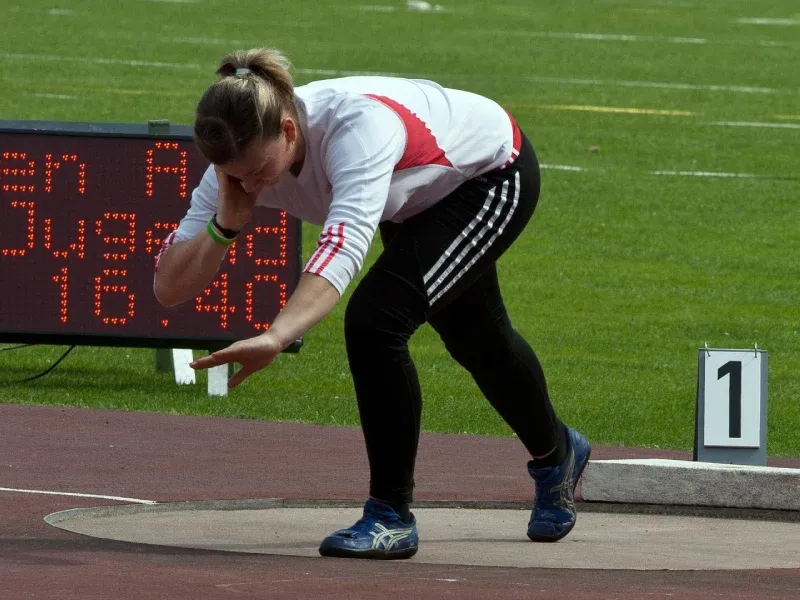
- A shot put competition on 20 June → aim: maximum power, clean technique, explosiveness
- A basketball tournament on 10 May → aim: speed, acceleration, changes of direction, sport-specific endurance, fast recovery
Step 2: decide how long your plan runs
Pick somewhere between 8 and 24 weeks before the objective, based on a couple of criteria:
- Your sport Endurance sports (trail, cycling, triathlon) need longer cycles than sports where you are building strength, explosiveness or speed (basketball, tennis, judo, track and field).
- Where you stand relative to your objective The general rule is “the further you are from your objective, the more time you need.” In short: if you are starting out and your objective is ambitious, go for a long plan (24 weeks); if you are already well trained and your objective is moderate, a shorter cycle will suit you better.
STEP 3: split your plan into 4 periods (the classic model)
You organise your plan around the 4 main periods, working backwards from your target date:
1. Transition period (if you are coming off a race or a rest period) → Length: 1 to 3 weeks → Aim: active recovery, mobility, injury prevention
Examples:
- Trail: easy hiking, swimming, stretching
- Shot put: joint mobility, light strength work
- Basketball: yoga, coordination drills, free play with no intensity
2. General preparation period (base) → Length: 4 to 8 weeks → Aim: build the fundamentals (endurance, general strength, mobility, stability)
Examples:
- Trail: long sessions on varied ground, high volume, moderate intensity
- Shot put: compound exercises (squats, deadlift, pull-ups, shoulders)
- Basketball: aerobic endurance work (easy running, cycling), whole-body strength work
3. Specific preparation period (specialisation) → Length: 4 to 6 weeks → Aim: work on the qualities specific to your discipline
Examples:
- Trail: climbs and descents on technical ground, intervals on a slope, pacing over long distances
- Shot put: power sessions (explosive squats, weightlifting, throws with a light implement)
- Basketball: acceleration, changes of direction, speed sessions, team play in match conditions
4. Competition / peak period → Length: 2 to 4 weeks → Aim: reach your performance peak
Examples:
- Trail: short but intense sessions on technical ground, recovery given full attention
- Shot put: maximum throws at high intensity, reduced volume, technical work
- Basketball: short, explosive sessions, match play, recovery treated as a priority
One thing to keep in mind when you plan your periods: the general rule is “when intensity goes up, volume comes down, and the other way round”. That is what lets you improve without getting injured.
STEP 4: build in mesocycles (3 to 6 weeks) and microcycles (weeks)
You can split each phase into mesocycles (3 to 6 weeks) for finer adjustment, and then into microcycles (1 week):
An example of a mesocycle:
3 to 6 weeks with one precise objective (raising your aerobic threshold for trail, adding 5 kg to your squat for the shot put, improving your speed for basketball)
An example of a microcycle:
- Monday: hard session
- Tuesday: active recovery
- Wednesday: moderate session
- Thursday: rest
- Friday: hard session
- Saturday: sport-specific session
- Sunday: rest or light activity
STEP 5: measure, then adjust according to your results
- Track your performances (times, load, heart rate, RPE).
- Spot the plateaus and the signs of fatigue
- Adjust volume or intensity if you need to
- Move on to the next period once you have hit your intermediate objectives
What if your objectives come thick and fast?
When objectives are close together (several races in 4 to 6 weeks, back-to-back tournaments), periodization does not disappear: it adapts. It becomes more agile, more reactive, more individual. Transition and general preparation periods are still there, but only in the off-season. For the rest of the year you alternate short blocks of specific preparation and competition, and you manage fatigue and recovery with real precision.
Conclusion: periodization is the scientific way to keep improving
Periodization is not a fashion. It is the method elite athletes use, and it is now within everybody’s reach thanks to digital tools, Slek among them.
You do not have to be a professional to benefit from it. You just need to organise your effort, set clear objectives, and follow a structured plan. A coach will help you enormously with that, but if you want to, you can also lay out your own season.
With Slek, you can: – Build a season plan very easily and adjust it as the season really unfolds (in Slek, macrocycles are called “periods”, mesocycles are “cycles” and microcycles are simply “weeks”, even when they do not last 7 days) – Check, as you plan your week, that the load you have planned is consistent with your season plan. – Track the load you actually complete, and check it against the load you planned. That is only a glimpse. All of these features will get their own article on this blog before long, so keep an eye out.
More articles you might like

Linear vs undulating periodization | The guide to choosing
Comparing linear and undulating periodization is not about finding a theoretical model. It is about finding a method that moves an athlete forward without wearing them out, without losing sight of the season, and without complicating the planning for nothing. For a coach, that is the real subject. The right answer depends on the athlete's level […]

Training monotony | Vary your training to progress
Training monotony is an underrated subject, even though it bears directly on progress, fatigue and injury risk. When workouts look too much like one another from day to day, the body stops receiving a signal nuanced enough to keep adapting effectively. In the short term that can look like consistency; in the medium term it usually […]
The 10 signs of overtraining you need to recognise
Performance dropping, or fatigue that will not lift? Learn to spot the 10 signs of overtraining and recover before the damage sets in.