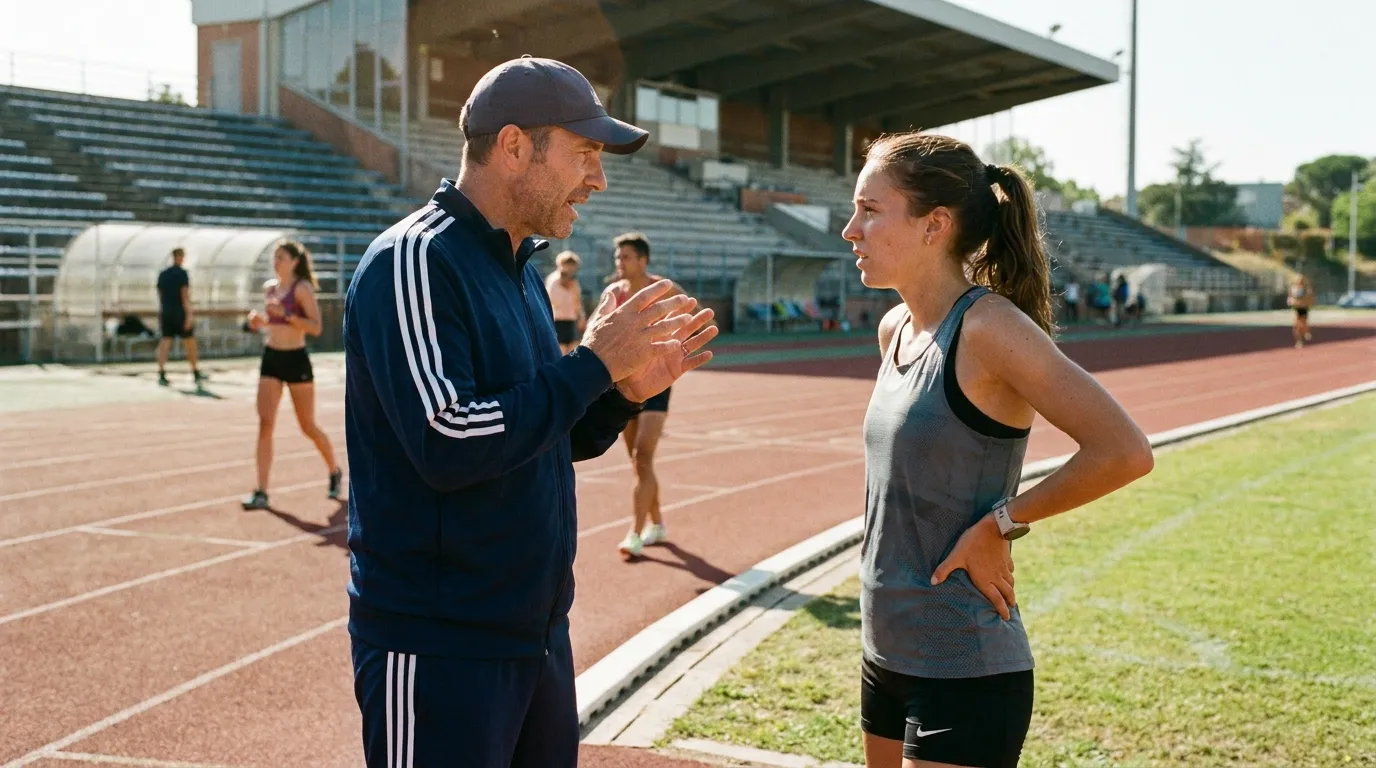
Coach-athlete communication is not just about giving instructions before a workout or correcting a movement. It is a central lever for progress, motivation and confidence. In endurance sports such as athletics, trail, cycling, triathlon and swimming, the quality of the exchange affects consistency as much as performance. When the relationship is clear, easy and respectful, the athlete understands more, buys in more and moves forward with more peace of mind. Vague or badly calibrated communication, on the other hand, quickly weakens their commitment.
5 keys to effective communication between coach and athlete
Reading time: ~9 min
Contents
- Why coach-athlete communication really changes how people progress
- 1. Practise active, complete listening
- 2. Build lasting trust
- 3. Use clear, simple language suited to the athlete
- 4. Set clear, shared objectives
- 5. Give constructive feedback that moves people forward
- The limits worth knowing about
- Common mistakes to avoid
- FAQ
- Conclusion
Why coach-athlete communication really changes how people progress
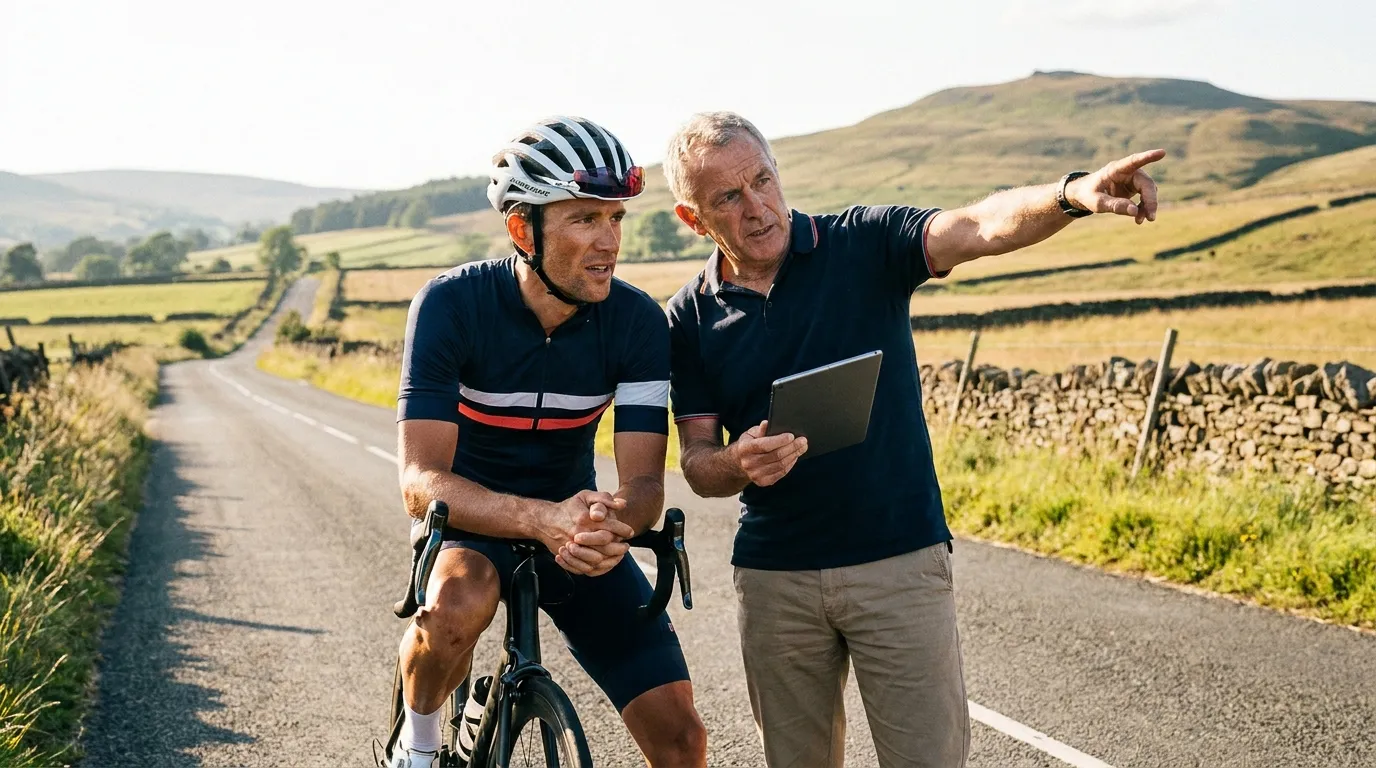
A lever beyond the programme
A good programme is not always enough. Even with relevant workouts, ambitious objectives and rigorous monitoring, results can stall if the message does not land. The relationship between coach and athlete rests on a subtle balance of structure, understanding and adaptation.
Research and practical experience in coaching point to one strong common factor: athletes improve more when they feel listened to, understood and involved in their own trajectory. That is true for a young club runner, an amateur triathlete, an open water swimmer or an experienced cyclist. In every case, the quality of the human connection creates fertile ground for learning.
We can therefore see communication as a skill in its own right. It helps a technical message land, adjusts the mental load, prevents misunderstandings and strengthens confidence at key moments. For you as a coach, it is a genuinely strategic soft skill.
To think further about how much the coach-athlete relationship matters, see also our dedicated article on the coach-athlete communication app.
1. Practise active, complete listening
Understanding what is said and what is not
Active listening is the first key, and probably the most underrated. Listening is not only about hearing the words: you also have to pick up the emotions, the hesitations, the tone of voice, the body language and sometimes what the athlete does not yet dare put into words.
In the coach-athlete relationship, that quality of listening changes everything. An athlete may talk about a difficult workout when the real subject is a loss of confidence, accumulated fatigue or outside pressure. If we only answer the symptom, we miss the cause. If we reflect back what we heard and leave some space, we open a useful conversation.
In practice, active listening rests on a few simple habits: being fully present, not cutting in too soon, asking a clarifying question, reflecting back what you understood, showing that how the athlete feels has its place, without immediate judgement. That approach creates a climate where the athlete can talk about tactics as easily as about doubts, recovery or personal difficulties.
In endurance sports, where the invisible load counts for so much, that stance is precious. A trail runner may say they lack the urge to train when they are actually sliding towards overtraining. A swimmer may seem distant when in fact she no longer understands the logic of the planning. The more finely we listen, the better we decide.
2. Build lasting trust
Trust is built in consistency
Trust cannot be declared. It is built workout after workout, exchange after exchange, and it rests on the consistency between what you say and what you do. A coach who promises individual support but answers vaguely or irregularly damages the relationship. Steady, honest communication, on the other hand, strengthens commitment.
Research and testimony show that where trust is present, athletes report higher motivation and stronger collective effectiveness. That makes sense: when an athlete knows they can speak freely, they report a pain, a doubt, a disruption or a need for adjustment far more readily. The coach then has better information to work with.
Transparency plays an essential part here. Admitting the limits of your knowledge on a subject, explaining a training choice, acknowledging that an adjustment is needed: all of it feeds mutual respect. Confidentiality also counts a great deal: an athlete has to know that what they share will not be trivialised or used against them.
Tools matter here too. A good tool does not replace the relationship, but it can make it clearer, more regular and more reassuring. That is where Slek makes sense. Beyond planning, a coaching app can become a support for the connection between coach and athlete, with a communication frame that is better organised, more continuous and more readable day to day. If you want to give that follow-up a simpler structure, have a look at what we offer.
3. Use clear, simple language suited to the athlete
Make instructions immediately actionable
Effective communication means messages that can be understood straight away. Too much jargon creates distance; too much complexity dilutes the message; too much information at once slows down how well it is taken in. The right habit is to speak the athlete’s language, connecting your instructions to their level, their objectives, their experience and their context.
Here is what genuinely helps:
- short, precise instructions connected to a concrete objective
- an illustration with a simple example, a sensory cue or something that happened in a previous workout
The non-verbal side counts too. Eye contact, an open posture, a calm voice and consistent behaviour all strengthen the impact of the message. An athlete often remembers the overall intention they perceived rather than the exact words. If that intention is clear, constructive and stable, the learning goes faster.

For example: telling a cyclist to “pace yourself better” stays abstract. Telling them “on the next climb, stay at an intensity where you can still talk in short sentences for the first five minutes” becomes immediately actionable: the message is more concrete, and therefore more useful.
4. Set clear, shared objectives
Give the athlete a direction they understand and share
Talking a lot about workouts and not enough about direction is a common mistake. An athlete commits more when they understand where they are going, why, and how the steps link up. Clear, shared objectives give them that direction.
SMART objectives remain a solid base, provided they are built with the athlete rather than simply announced by the coach. When the athlete takes part, their autonomy grows: they understand the point of the effort, they buy into the choices and they become an actor rather than someone carrying out instructions.
| Element | Good practice | Example |
|---|---|---|
| Direction | connect the objective to a clear priority | improve specific endurance over 10 km |
| Measurement | choose a simple indicator | hold a target pace on a benchmark workout |
| Realism | fit it to the level and the calendar | progress over 8 weeks |
| Meaning | explain why this objective matters | finish races better and pace them better |
| Co-construction | confirm the athlete is on board | ask how they feel and what constrains them |
This approach avoids a common misunderstanding: the coach thinks they are motivating by setting a high objective, when the athlete may experience it as extra pressure. Clarifying expectations together reduces that gap.
5. Give constructive feedback that moves people forward
Making feedback useful and respectful
Feedback is often where the relationship is decided. Badly framed, it can close the conversation down; precise and balanced, it can trigger a real breakthrough. The key is not simply to be positive: it is to be useful, honest and respectful.
Good feedback concentrates on observable behaviour, rests on facts and offers concrete ways to improve. It combines the technical and the emotional: it says what to adjust, but also how to support confidence during that adjustment.
For example: rather than “you’re not rigorous enough”, say “over the last three weeks the workout feedback has arrived very late, which makes adjusting harder. If you send me how you felt on the day itself, we can calibrate what comes next better”. The message is clear, precise and oriented towards a solution.
To make your feedback more effective, keep three principles in mind: get to it soon enough after the event, balance positive reinforcement with the area to work on, and check that the message was understood.
The limits worth knowing about
Even the best coaches do not communicate perfectly all the time. There are real limits: time (supporting several athletes can dilute the quality of each exchange), interpretation (writing can come across as curt or vague), information overload (too much technical detail sometimes kills the action) and misalignment (the coach sends a message the athlete is not in a state to hear).
A coherent follow-up frame then becomes useful. In disciplines where the exchanges are frequent, bringing information, workouts and feedback together helps communication flow without dehumanising it. The tool does not replace the relationship; it supports it.
Common mistakes to avoid
Avoid the habits that block the conversation
- Talking more than the athlete, interpreting too quickly, or answering before you have understood
- Giving vague instructions, imposing objectives, or giving feedback aimed at the person
Good communication, by contrast, creates a clear frame, real availability and simple reference points. It is usually that regularity that makes the difference over time.
FAQ
How can I improve communication with an athlete quickly?
Start by putting a simple ritual in place: a check-in before the training week, feedback after the key workouts and a systematic restating of the objectives. That structure alone improves the quality of your exchanges considerably.
Should I adapt my communication to the athlete’s level?
Yes, always. A beginner needs simple, reassuring reference points. An advanced athlete usually expects more precision, more autonomy and more co-construction. The substance can stay consistent, but the form has to change.
Can you communicate well by written message alone?
Not entirely. Writing is useful for keeping a record, clarifying and organising. But as soon as there is tension, a misunderstanding or a sensitive subject, talking is usually more accurate. The ideal is to combine the two intelligently.
How can a tool like Slek help?
A dedicated tool can give the follow-up more structure, bring exchanges together and make workout feedback easier. For a coach, that means staying in more regular contact with athletes without multiplying channels. To go further, explore our solutions for coaches.
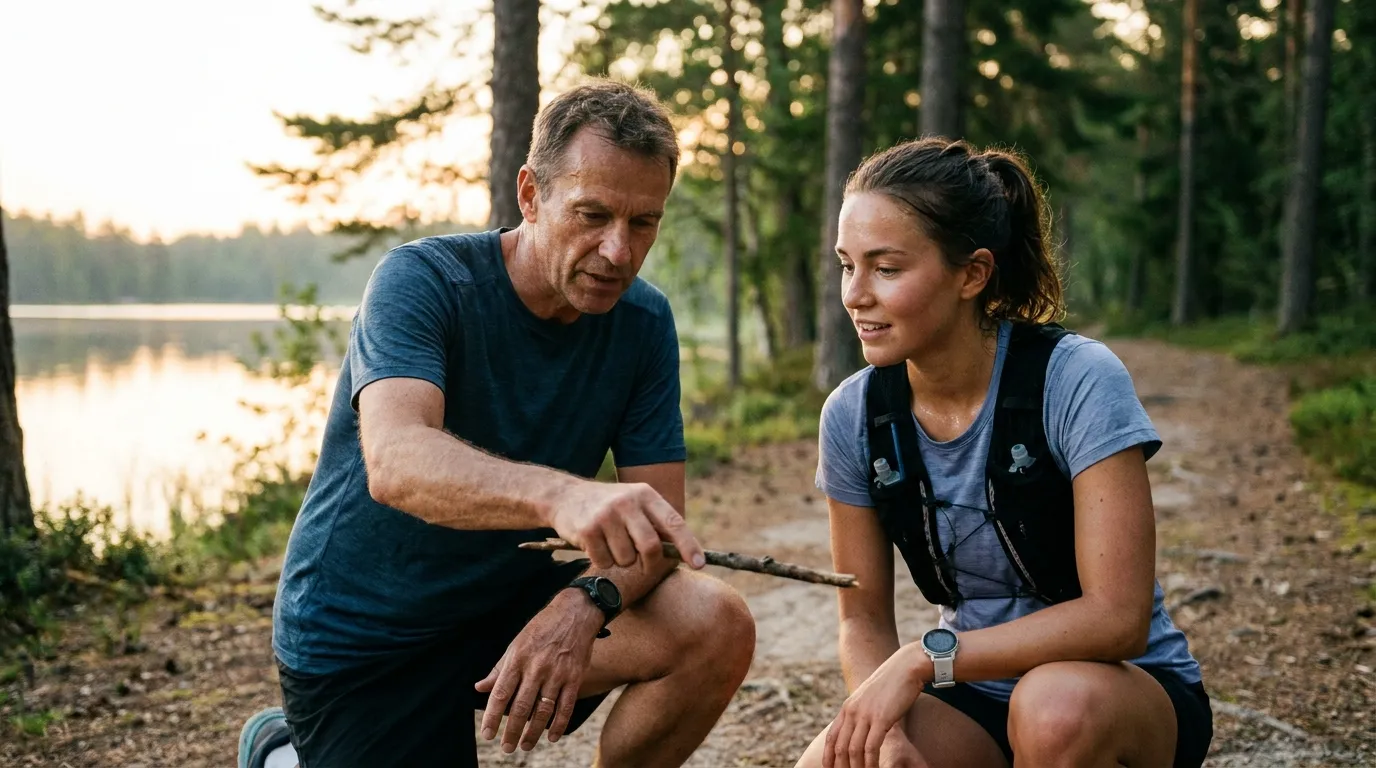
Conclusion
The essentials for communicating better
Good coach-athlete communication rests on five simple but demanding pillars: really listening, building trust, speaking clearly, setting shared objectives and giving feedback that makes people grow. For a coach in athletics, trail, cycling, swimming or triathlon, this skill is not secondary; it is part of the job. And when it rests on a follow-up frame that flows, it becomes a factor in retention, in progress and in performance. If you want to give that relationship more clarity, you can take a look at what we offer.
More articles you might like
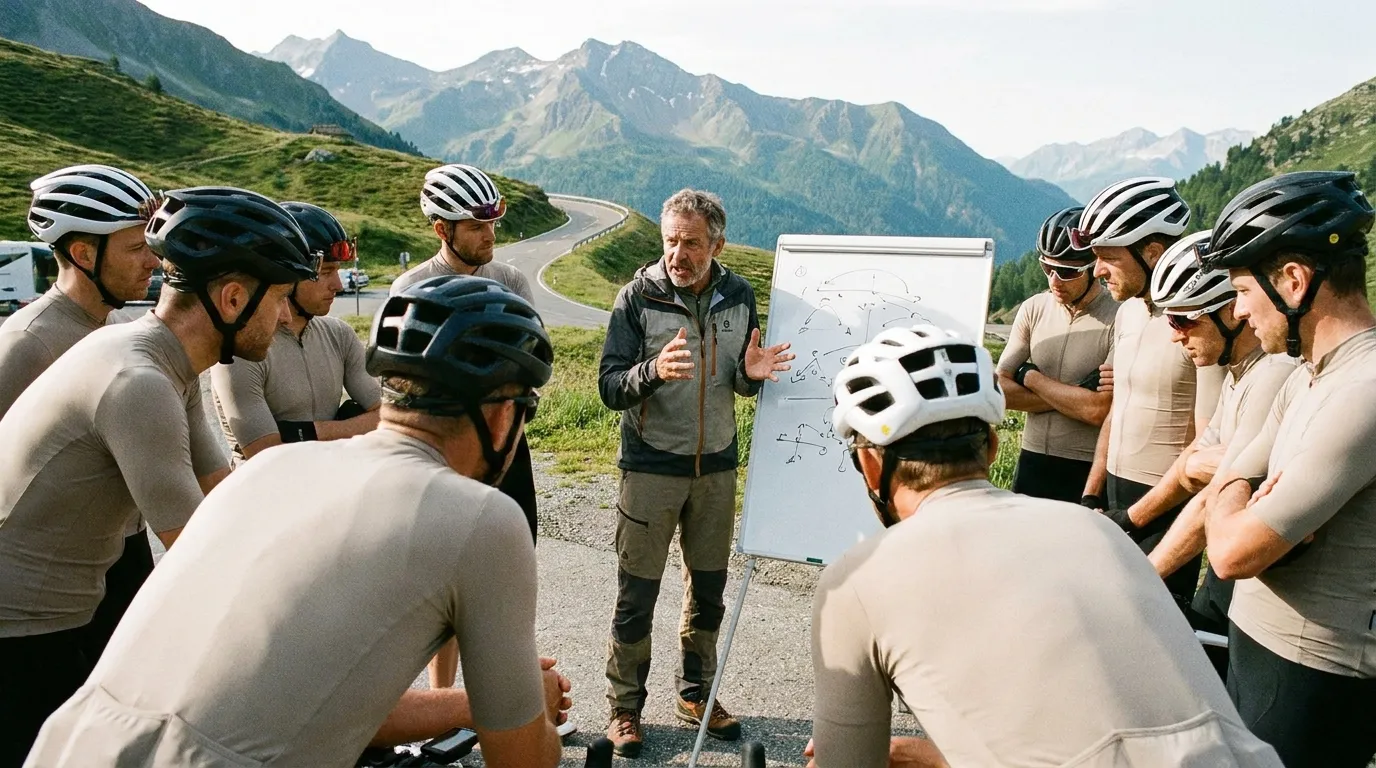
Coaching 30+ athletes: keeping the quality of your follow-up
Once you are coaching 30 athletes, it is no longer only a question of technical skill. It is a question of organisation, of mental load, and of your ability to keep the follow-up genuinely useful for each of them. Plenty of endurance coaches hit the same friction point: messages arrive from everywhere, plans pile up, and every […]
Slek, the software that makes a sports coach's job simpler
Coaching athletes is not just about supervising training. It also means planning individual workouts, analysing performance in detail and handling demanding logistics. Slek is there to take all of that off your hands.
How to become a triathlon coach | The complete guide
If you are wondering how to become a triathlon coach, one essential point comes first: in France, coaching for payment does not rest on sporting experience or race results alone. Article A212-1 of the Code du sport sets a clear regulatory frame, a recognised qualification and genuine coaching skills. The job […]