When the days get shorter, the cold sets in and tiredness seems to hang around for longer, staying motivated to train through the winter can quickly become a real challenge. We see it every year: even regular athletes lose their appetite for training, while consistency is still what drives progress. Yet there is nothing inevitable about it. With a few practical adjustments, you can turn winter into a useful, steady and even stimulating season for your training.
How to stay motivated to train in winter: 7 strategies that work
Reading time: ~11 min
- Winter training motivation: why is it so hard?
- Lean on a group so you are not training alone
- Set clear, visible and realistic goals
- Build simple rituals that leave no room for excuses
- Vary your activities so boredom does not set in
- Focus on the immediate benefits
- Adapt your sleep, recovery and nutrition
- Count on personalised support and small rewards
- What to do and what to avoid in winter
- Common mistakes that undermine winter motivation
- FAQ
- Winter: a decisive season for your progress
Winter training motivation: why is it so hard?
If you feel less motivated in winter, it is neither a lack of willpower nor a discipline problem of your own. Several obstacles add up: the cold makes getting out of the door harder, the lack of light weighs on your mood, daily obligations take up more room and your body often asks for more recovery.
On top of that comes a classic mental pattern: in winter, we bargain with ourselves more. The best levers therefore do not rely on motivation alone, but on organisation, environment and habits. One or two well-chosen actions are often enough to get the momentum back.
Lean on a group so you are not training alone

Why a group makes the difference
Do not let your training depend only on how you feel that day. A workout planned with friends, a club, a gym or a coach sharply reduces the dropout rate. Training together breaks the isolation, helps you get going and makes the effort more enjoyable. Even for very self-reliant endurance athletes, one group workout a week can restore the momentum.
The deeper into winter you get, the more the human connection becomes a performance factor. A tool for planning group workouts can make all the difference, for example this app that lets you create training squads so you can train with colleagues or within a club.
Set clear, visible and realistic goals
Make your goal concrete
Without a precise goal, winter quickly turns into a string of vague workouts. A concrete target keeps you committed: running five more kilometres a week, preparing for a late-winter race or simply staying consistent for eight weeks. Keep that goal in sight: in your diary, as your phone wallpaper, in a training log or through a few simple metrics. To go further, have a look at these articles on periodization in sport.
Build simple rituals that leave no room for excuses
A drop in motivation often comes from an overload of micro-decisions: where is my kit, what time should I leave, is it too cold? Turn these into rituals to clear the obstacles away: lay out your clothes the night before, plan the journey, set fixed weekly slots.
Quick checklist for a successful winter week
- Get your kit ready the night before each workout
- Block the slots in your diary
- Have an indoor fallback option
- Set the goal for the week
- Keep track of how you feel and how tired you are
Vary your activities so boredom does not set in
Keep a common thread without falling into a routine
Monotony wears motivation down. Keep your common thread while alternating cardio, strength work, mobility, yoga, indoor trainer, swimming or short workouts at home. In winter, consistency is often worth more than overly aggressive ambition.
Focus on the immediate benefits
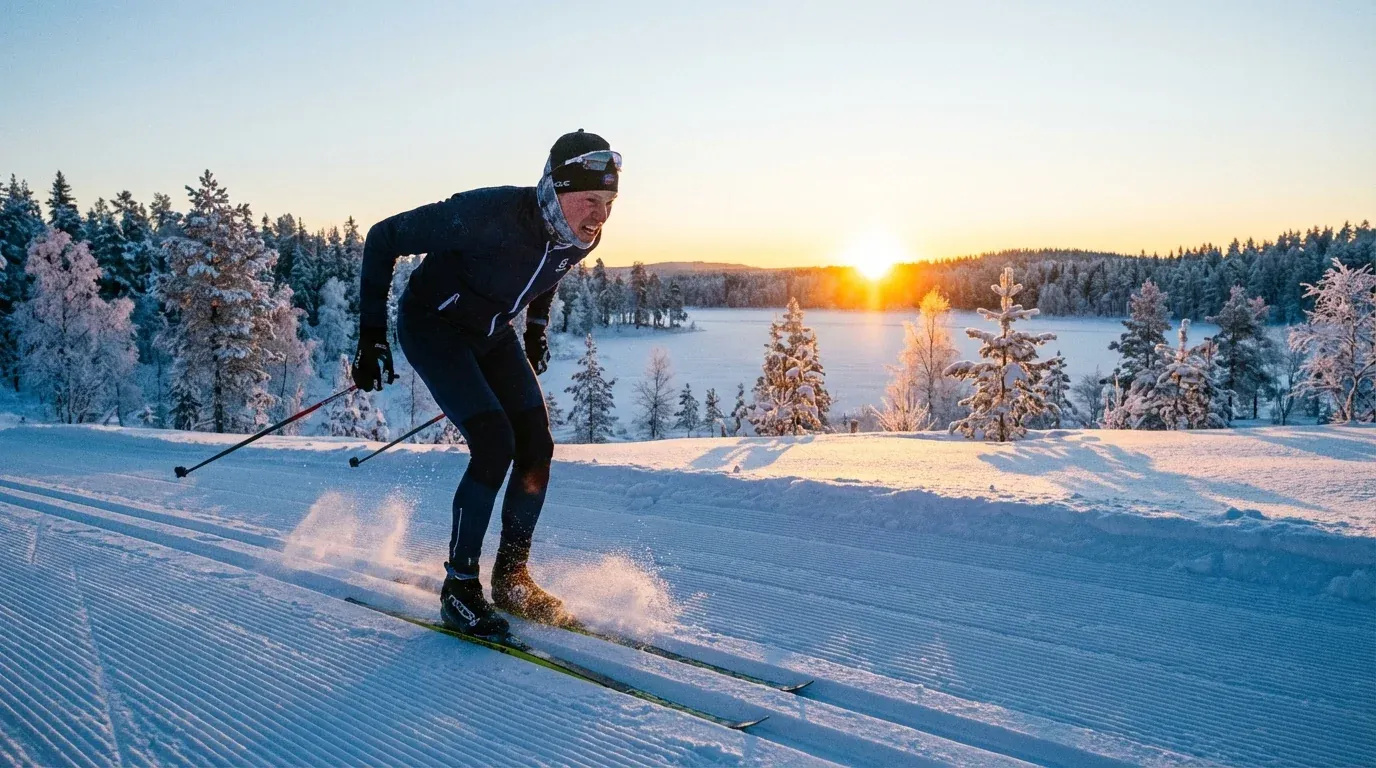
Waiting only for a future payoff is not enough. Remind yourself what training gives you today: a better mood, less stress, endorphins, mental clarity, more energy overall and support for your immune system. Before a workout, think about how you will feel afterwards rather than about raw performance.
Adapt your sleep, recovery and nutrition
Adjust your lifestyle
Keeping exactly the same rhythm as in the autumn is often a mistake. Your body may need more sleep, better-structured recovery and steadier eating. Going to bed earlier, preparing simple meals in advance and drinking regularly make all the difference.
| Area | Do | Avoid |
|---|---|---|
| Sleep | Keep regular hours | Cutting your nights short during the week |
| Nutrition | Prepare simple meals in advance | Improvising with junk food every evening |
| Recovery | Lighten some workouts when fatigue builds up | Pushing through at all costs |
| Hydration | Keep drinking regularly | Thinking you do not need to drink because it is cold |
Count on personalised support and small rewards
When motivation fades, personalised support can make the difference: realistic goals, a suitable load, protection against overdoing it. Simple rewards (a good meal, a moment of rest, a visual record of the workouts you have completed) reinforce the habit in a positive way.
What to do and what to avoid in winter
| Do | Do not |
|---|---|
| Start with one or two strategies rather than changing everything at once | Wait until you feel perfectly motivated before acting |
| Adapt the load when fatigue, lack of sleep or stress increase | Copy your summer rhythm without taking the season into account |
| Plan indoor alternatives so workouts do not get cancelled | Feel guilty after a weaker week |
| Keep a simple record of your consistency and how you feel | Make up for missed workouts with workouts that are too hard |
Common mistakes that undermine winter motivation
The first mistake is to think the problem lies only in your head, when it often comes from a poorly designed system (an unrealistic schedule, kit that is never ready, a vague goal). The second is trying to do too much: abrupt restarts often end with giving up. The third is ignoring the early warning signs (fatigue, irritability, disturbed sleep).

FAQ
Is it normal to feel less like training in winter?
Yes. The cold, the lack of light and fatigue make it harder to get going. Adapting your environment usually works better than judging yourself.
Should you cut back your training in winter?
Not necessarily, but adjusting the intensity, volume or format to how you feel is often useful. Consistency matters more than immediate performance.
Does training in a group really help?
Yes. Training with others improves commitment, enjoyment and consistency: it is a dependable lever against seasonal loss of motivation.
How can a coach better support their athletes in winter?
By clarifying goals, simplifying the planning, keeping in regular contact and monitoring how athletes feel as closely as their load.
Winter: a decisive season for your progress
Winter is not just a season to get through; it is a decisive period for building a solid base, keeping your progress going and strengthening the habits that really count. To take this further, browse the Slek blog.
More articles you might like

Sport and work: fitting endurance training into your diary
Struggling to combine sport and a demanding job? Follow this guide to fit endurance training into a packed schedule, with simple steps.

SMART goals, and then what? Why WOOP makes the difference for athletes
In an earlier article (SMART sports goals: the step-by-step guide) we looked at how to build clear, coherent training goals with the SMART method. Knowing where you are going and laying the foundations is an essential first step. But in the reality of day-to-day training, framing a goal is not always enough […]

SMART sports goals: the step-by-step guide
Motivation on its own is not enough to keep improving. In sport, plenty of people set themselves vague intentions and then lose heart for want of anything concrete to hold on to. That is exactly where SMART sports goals make a difference. The method turns a general wish into a clear, measurable and realistic plan of action. Self-coached athlete or […]