An introduction to active recovery and what it does for your regeneration between two hard workouts.
Active recovery: the guide to regenerating faster (for real)
Reading time: ~6 min
- What active recovery actually means
- The science behind lactate clearance and blood flow
- Concrete protocols to fit into your week
- Intensity, duration and frequency: the numbers to remember
- The most common mistakes
- FAQ
- Active recovery: the essentials
What active recovery actually means
Active recovery covers all the very low intensity physical activity you do after or between hard training sessions. The aim is not to perform but to speed up muscular, energetic and nervous regeneration without adding any further fatigue.
Scientifically, it means keeping up sub-maximal work at the end of a tiring exercise. Maintaining that light activity preserves your level of performance from one effort to the next by speeding up the recovery processes at the energetic, muscular and psychological levels. In plain terms, your body carries on working gently instead of stopping abruptly, which lets it deal with the metabolic waste built up during the effort.
It matters to distinguish this from passive recovery, which rests on complete rest: staying still, sleeping, eating, drinking. The two complement each other. Active recovery does not replace rest; it complements it intelligently so you can progress without falling into overtraining.
The science behind lactate clearance and blood flow
How active recovery acts on lactate
This is where the method holds its main interest for endurance athletes. During a hard effort the body produces metabolic waste, including lactate, which builds up in the muscles and contributes to the feeling of heavy legs and fatigue.
Light activity maintained after the effort increases the flow of oxygen-rich blood to the muscles. That increased blood flow does two essential things: it brings more nutrients to the muscle areas that need to regenerate, and it helps clear the metabolic waste that has built up. That is what is known as lactate clearance, a central mechanism in recovery for athletes in trail running, triathlon and cycling.
The documented benefits also include less soreness and muscular stiffness, better joint mobility and better overall recovery between two workouts. Some approaches also add a cognitive dimension: keeping up light mental stimulation during recovery helps reset attention, decision-making and reactivity, which is of particular interest in team sports and in events that demand a lot of concentration, such as orienteering.
Concrete protocols to fit into your week
The recovery run
This is the most accessible option for a road or trail runner. It means running at a very slow pace, well below your usual easy endurance rhythm. The target intensity sits between 30 and 60% of your maximum heart rate, with a perceived effort of at most 3 out of 10. A simple reference point: you should be able to hold a full conversation without getting out of breath.
The recommended duration after a hard workout is 10 to 40 minutes. This kind of outing also works the day after a race or a long training session, in place of a complete rest day.
The easy bike ride
Cycling suits active recovery particularly well because it works the cardiovascular system with no mechanical impact on the joints. After a run or a hard leg strength session, 20 to 30 minutes of very easy pedalling is enough to get the circulation going and speed up muscular regeneration. The intensity has to stay very moderate, with no heavy resistance and no bursts of power.
Light swimming
Low-intensity swimming is often cited as one of the best options for active regeneration, particularly because it combines cardiovascular stimulation with complete unloading of the joints. The water exerts a light pressure on the limbs, which can also help reduce the sensation of muscular swelling. A 20 to 30 minute session at an easy pace, with no clock and no performance goal, is enough to get the benefit. You do have to be comfortable in the water, though: if you are out of breath after 50 m, your active recovery is better done in another discipline 😉
Mobility, yoga and gentle stretching
For rest days or the day after a race, a session of gentle yoga or joint mobility work is an effective alternative. These practices keep a light muscular activation going while encouraging mental relaxation and suppleness, two factors often neglected in endurance progression.

Intensity, duration and frequency: the numbers to remember
| Parameter | Recommended reference |
|---|---|
| Intensity | 30-60% of max HR |
| Perceived effort | 1 to 3 out of 10 (Borg scale) |
| Talk test | Able to talk very easily |
| Duration after a workout | 10 to 20 minutes |
| Duration on an active rest day | 20 to 40 minutes |
The key point is that intensity is the deciding factor. A regeneration activity that goes above an RPE of 3 stops being active recovery: it becomes an extra workout that adds fatigue instead of dispersing it.
The most common mistakes
Staying completely still after the effort
The first mistake is staying completely still after a hard effort. Stopping abruptly slows the reactivation of the cardiovascular system and the clearing of metabolic waste. Even five minutes of slow walking after a race makes a real difference.
Confusing active recovery with light training
The second mistake is confusing active recovery with light training. Some athletes turn their regeneration outing into a moderate workout, with accelerations or stretches at a sustained pace. That is counterproductive: the intensity has to stay low from start to finish.
Always picking the same discipline as your main training
The third mistake is always choosing the same discipline as your main training. If you run regularly, a regeneration session on the bike or in the pool will often do more for you than a slow run, because it limits the repetitive mechanical load on the same muscle groups.
FAQ
Does active recovery suit every level?
Yes, whatever your endurance level, active recovery has a place in your routine. For a beginner preparing for a first triathlon or their first trail outings, a brisk walk or a very easy bike ride is enough. For an experienced athlete the protocols can be slightly longer, but the intensity stays just as low. The essential thing is never to turn the session into an extra workout.
How soon after a race can you do active recovery?
Ideally a short session of 10 to 20 minutes can be done directly after the event, in the form of walking or very slow jogging. In the following days an easy bike ride or a light swim is recommended. If the race was particularly long or punishing, though (a long-distance trail race, an Ironman), one or two days of complete passive recovery are better before you take up any activity, even a light one.
Does active recovery replace complete rest days?
No. Active recovery and passive rest meet different needs and complement each other. On some days the body needs light stimulation to speed up regeneration. At other times, particularly after very heavy training blocks or when there are signs of deep fatigue, complete rest remains the better option. Learning to tell those two situations apart is part of progressing in endurance sport.
Active recovery: the essentials
Bringing active recovery into your training routine means accepting that progress does not always mean training harder. It also means handling the phases between workouts with as much care as the workouts themselves. A slow run, an easy bike ride or a gentle swim can make the difference to whether you string weeks together without getting injured and arrive fresh at your next race. To go further in structuring your training and following your intensity zones, see what Slek can do for you.
More articles you might like
The 10 signs of overtraining you need to recognise
Performance dropping, or fatigue that will not lift? Learn to spot the 10 signs of overtraining and recover before the damage sets in.

HRV | Heart rate variability and training
Heart rate variability (HRV) has become an increasingly useful reference for understanding what the body is genuinely able to take day to day. It is not about following one more number on a watch or an app: it is above all a way of reading your recovery […]
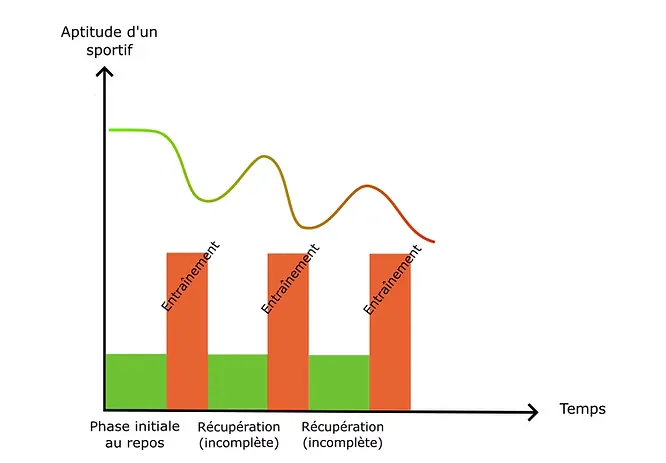
Getting the most out of training: preventing overtraining with proper monitoring
How to spot overtraining and stay clear of it. Slek can help!