What is the ACWR?
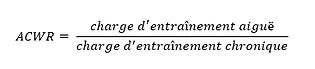
The ACWR (Acute Chronic Workload Ratio) measures the balance between your recent load and the load your body is used to.
As a reminder, training load can be calculated in several ways, for example with TRIMP or with the Foster model (see the article TRIMP vs Foster: which training load model should you choose?). In short:
-
TRIMP = duration × heart rate
-
The Foster model = duration × perceived intensity
Calculating the ACWR means talking about acute load and chronic load, an idea inspired by the Banister model.
Acute training load (ATL) covers your recent activity, generally over the last 7 days, and therefore stands for fatigue. Chronic training load (CTL) refers to your average load over a longer stretch. That is the load your body is used to, and it is often calculated over 6 weeks. It represents your habit of carrying that load.
The result is a ratio with no unit, but with typical value ranges you can use to judge the risk of injury.
What is the ACWR for?
Following the work of Gabbett, Hulin and others, the usual reading is:
-
Between 0.8 and 1.3: the risk of injury is low. The closer the ratio gets to 1, the closer the acute training load is to the chronic training load.
-
Above 1.50: when acute training load rises sharply, the ACWR climbs considerably and the athlete is exposed to a potential risk of injury, or to absorbing the training badly.
-
Below 0.8: possible undertraining, which can lead to losing your adaptation to effort.
The ACWR therefore gives you an indicator alongside training load: it compares what the athlete has done with what they are able to take. A stable ratio, even a high one, appears to reduce injuries. That makes the ACWR more predictive of injury than acute or chronic load on their own.
Find the ACWR in Slek
In Slek, the recommended load is calculated from this indicator. It is the green zone you see on the load charts. It corresponds to an ACWR, calculated with a chronic load over 6 weeks (microcycles), of between 0.8 and 1.3.
More articles you might like

The 10 signs of overtraining you need to recognise
Performance dropping, or fatigue that will not lift? Learn to spot the 10 signs of overtraining and recover before the damage sets in.

HRV | Heart rate variability and training
Heart rate variability (HRV) has become an increasingly useful reference for understanding what the body is genuinely able to take day to day. It is not about following one more number on a watch or an app: it is above all a way of reading your recovery […]

Training monotony in sport
Your Slek app tracks your training monotony index. Here is why that number matters.