Planning your triathlon season is not just about filling a calendar with workouts and race numbers. It is about organising your progress so you arrive in shape at the right moment, without exhausting yourself or spreading yourself thin. Think the season through in advance and you gain clarity, your training makes more sense and you reduce the risk of injury or overtraining. Let us look at how to build a season plan that is realistic, effective and adaptable, whether you are a beginner or already have some experience. The idea is not to set your year in stone, but to give you a simple method for planning a triathlon season that lasts.
How to plan your triathlon season: the step-by-step guide
Reading time: ~15 min
Contents
- Why planning your season really changes your results
- Step 1: define your objectives and choose the right races
- Step 2: structure the season into blocks of progress
- Step 3: build your weeks without spreading yourself thin
- Step 4: manage load, recovery and building your form
- Step 5: plan nutrition, logistics and race day
- Do and don’t for a season you genuinely control
- The most common mistakes when preparing a triathlon season
- FAQ
Why planning your season really changes your results

Giving the whole season a logic
Plenty of athletes string training weeks together with no overall view. They work hard, but not always in the right direction. And in triathlon the difficulty comes as much from the variety of disciplines as from managing fatigue, life constraints and the timing of your form.
A well-prepared season lets you rank your objectives, stops you trying to be at your peak all year, and gives every period a role. You know why you are building a base, when to raise the intensity, when to ease off and when to test your level. That logic is what turns a string of workouts into genuine annual planning.
The most serious sources agree on one point: it is better to pick few priority objectives, generally one to three, and to space them out enough to give the body time to improve and then recover. In most cases, an interval of three to four months between two big objectives remains the healthiest base.
Step 1: define your objectives and choose the right races
Ranking the races
The first mistake is entering everything. The second is picking a distance that matches neither your level, nor your available time, nor your injury history.
To organise your season properly, start by sorting your races into three categories. A races are the big objectives. B races serve as a dress rehearsal or a test. C races are secondary and should stay cheap in physical and mental fatigue.
If you are starting out, it is often wiser to aim at a sprint, or even a super-sprint, before considering an Olympic distance or anything longer. If you have less than eight months, concentrate on a single main objective. With a longer season and a good base, on the other hand, you can spread two or three high points through the year.
| Type of race | Role in the season | Recommended number |
|---|---|---|
| A race | Major objective, peak form | 1 to 2 |
| B race | Preparation race, fine-tuning | 1 to 3 |
| C race | Taking part for the pleasure, nothing at stake | Occasionally |
Then put those dates on an overall calendar. If you can, place a test race between four and ten weeks before your main objective. A middle-distance triathlon can serve as a rehearsal before a longer format, as long as you fit it intelligently into the training load.
At this stage, ask yourself four questions: how many hours a week can you devote to training? Which discipline is your weakest? What is your history of fatigue or injury? And above all, which race really matters to you?
Step 2: structure the season into blocks of progress
Splitting the year into useful phases
Good preparation does not rise in a straight line. It alternates phases of development, specialisation, competition and recovery: that is the principle of periodization.
In a classic layout with one main objective, the season is often split into three big blocks: general preparation (4 to 6 months), specific preparation (2 to 4 months) and the competitive period (1 to 2 months). If you have two main objectives at least three months apart, add a short regeneration phase between them.
Tapering before the event is essential. One to three weeks before the day, volume drops but intensity stays. More on periodization.

Step 3: build your weeks without spreading yourself thin
Creating a coherent routine
A successful season rests less on one perfect week than on an accumulation of coherent ones. For an amateur triathlete, weekly volume often runs between three and twelve hours depending on the distance and the period, across four to six workouts a week.
The order of the workouts counts as much as their content: avoid two big run sessions back to back, put technical swimming in when your legs are heavy, and so on. Think about brick workouts too, to get the body used to the bike-run transition, because the first few times it can feel very strange.
A planning tool makes the tracking far easier, such as the software that makes a sports coach’s job simpler.
Step 4: manage load, recovery and building your form
Finding the right balance between effort and recovery
Training more is not always training better. Every block of work has to contain lighter weeks: those phases are when the adaptations consolidate. People often say that progress happens while you rest. In practice, one or two days of relative or complete recovery a week remains a solid base. A good way of making sure you take quieter moments in the week is to follow your training monotony in an app like Slek.
Sleep, nutrition and mental load all directly affect recovery. Good planning has to stay alive and absorb the unexpected. A few simple indicators (volume, RPE) are usually enough to watch the load without going overboard. See also our content on overtraining.
Step 5: plan nutrition, logistics and race day
A well-built season is also decided outside the workouts. Use your long training sessions to validate your hydration, your carbohydrate intake and your kit. In race week, reduce the load, sleep as much as you can, pack your bag in advance and visualise your transitions. On the day, arrive early, set your space up calmly and keep a simple routine.
Do and don’t for a season you genuinely control
- Do: choose one to three priority objectives, space them at least three months apart, build blocks with progression and a taper, adjust to your actual fatigue, test nutrition and kit before the races.
- Don’t: chase maximum form all year, copy someone else’s plan without the context, raise volume and intensity abruptly, neglect recovery weeks, enter races that have no precise role.
The most common mistakes when preparing a triathlon season
The traps to avoid from the start
First mistake: too many objectives. Second: underestimating the time recovery takes. Third: believing that motivation will always make up for a lack of recovery. Another trap is working every discipline at the same intensity all year. Finally, plenty of athletes string seasons together with no break. After your last important race, take two to four easier weeks to regenerate mentally and look back over your year.

FAQ
How long does it take to prepare for a target triathlon?
It depends on the format and on where you are starting from. Generally count on between eight and twenty weeks of structured preparation, and often more if you are building a complete base beforehand.
Can you have several objectives in a year?
Yes, but you have to rank them. Two major objectives can coexist if they are far enough apart. Three demands finer organisation and good experience.
What is the best way to improve without getting injured?
Gradual progression remains the key: raise the load in stages, keep lighter weeks, sleep enough and adapt your plan when signs of fatigue persist.
Do you absolutely have to follow “zones”?
An experienced athlete can train on feel alone (RPE). For beginners, a chest strap that picks up heart rate is a genuinely useful tool for getting to know yourself and avoiding the “always flat out” syndrome, where every workout becomes a hunt for a KOM.
Planning your triathlon season means giving your training a precise direction while keeping enough flexibility to deal with real life. And if you want to turn that method into a concrete plan, readable and easy to change for you or your athletes, take a look at our app for coaches and at the blog for more on planning.
More articles you might like
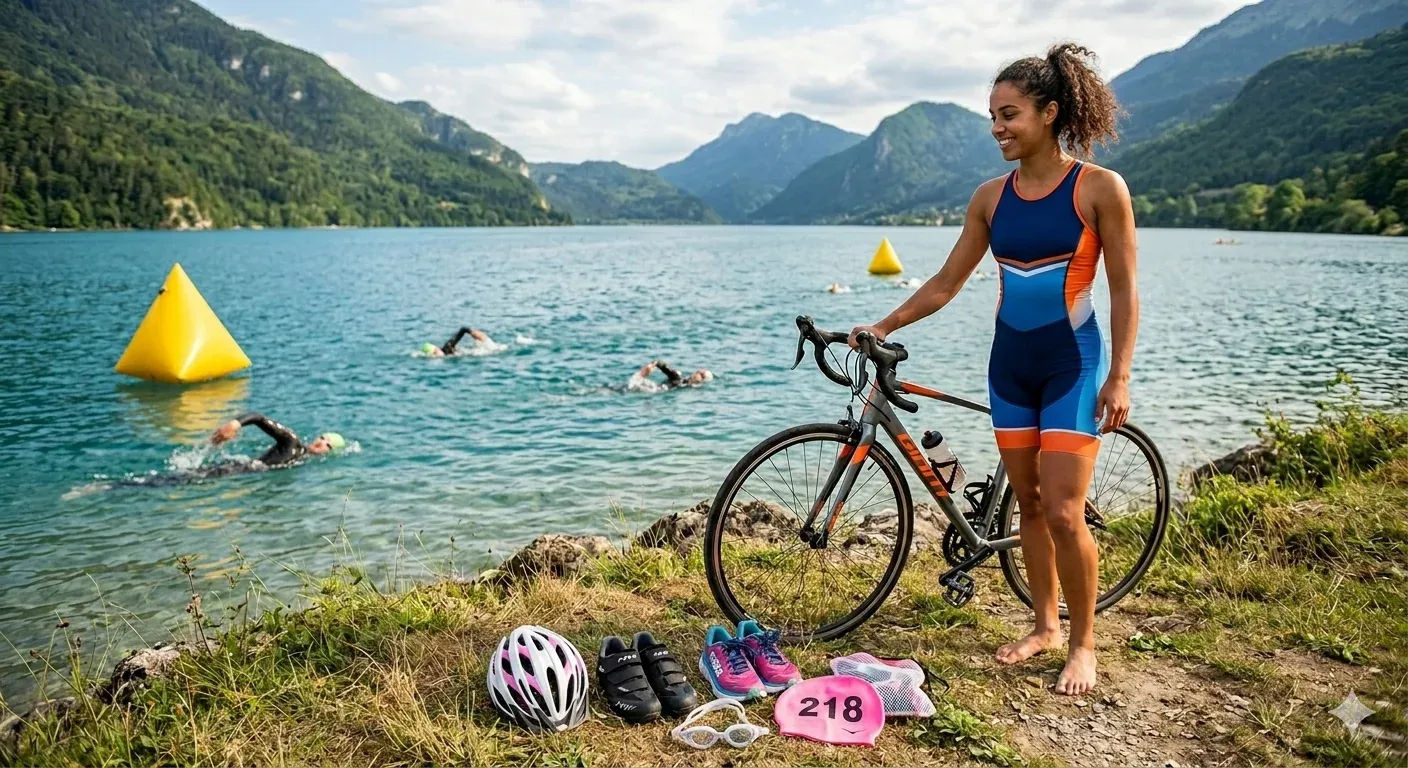
A step-by-step guide to preparing your first triathlon
Distance, kit, an 8-week training plan, transitions: follow this step-by-step guide to prepare your first triathlon calmly and avoid the beginner's mistakes.
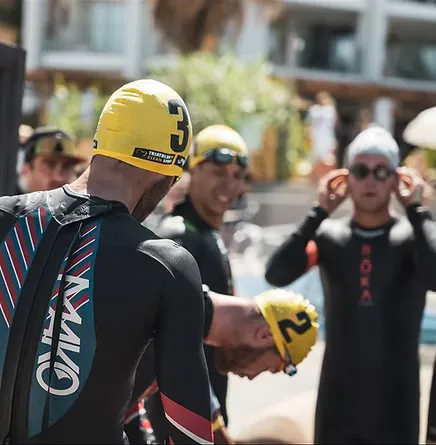
Slek: the app for triathlon
Triathlon is about as complete a sport as you can find, and about as demanding. Between swimming, cycling and running you have to juggle the training and manage the recovery. That is where a planning and analysis app earns its place, as a real asset in your preparation and your training records. Slek is the app you […]

Sport and work: fitting endurance training into your diary
Struggling to combine sport and a demanding job? Follow this guide to fit endurance training into a packed schedule, with simple steps.