The annual break is one of those subjects that divides people almost as much as it reassures them. Some see it as essential to lasting; others live it as a step backwards or a loss of level. Yet among endurance athletes the signals broadly point the same way: a planned pause often helps you recover better, come back more motivated and, in the end, avoid the forced stop that comes with injury.
If you coach athletes in running, trail, triathlon, cycling or swimming, you know the dilemma well. Should they stop outright, just ease off, or carry on all year with no real recovery window? Let us look at what the annual break really involves, when to plan it, how long it can last and how to set it up sensibly.
The annual break: is it really necessary? (When, how long, how)
Reading time: ~12 min
Contents
- Taking an annual break is not laziness
- Why an annual pause is often necessary
- When to take an annual break
- The signs that it is time to stop
- How long the break should last
- How to take an annual break without sabotaging yourself
- Complete stop or partial break
- Common mistakes to avoid
- FAQ
Taking an annual break is not laziness
In the sporting imagination, stopping is sometimes read as a lack of discipline. In reality, the annual break is a tool for progress. It is a deliberate period of very sharply reduced sport-specific training, or a temporary stop altogether, after a heavy block or a demanding season.
In endurance sports the body takes an enormous amount. Even when everything seems fine, muscles, tendons and joints accumulate micro-traumas. On top of that come nervous fatigue, mental load and the wear that comes with repetition. The annual pause is precisely what breaks that logic of permanent accumulation.
It is also a genuine psychological lever: a well-managed pause recharges motivation, reduces performance-related stress and brings the pleasure back to training. Stopping a little, in other words, can help you commit more afterwards. A pause of 10 to 21 days preserves a large part of your physiological qualities, including much of your VO2 max.
Why an annual pause is often necessary

Physical and mental fatigue
Physically, after a full season, an athlete accumulates both visible and hidden fatigue: slower recovery, diffuse aches, less restorative sleep, a feeling of heaviness. Mentally, repeating the same cycles and objectives can bring weariness or irritability. It is better to decide on a temporary stop than to have an overuse injury decide for you.
That time also lets you step back and look at the season as a whole. To go further into planning, our article on periodization may be useful.
When to take an annual break
The best moment depends on the calendar, on accumulated fatigue and on the athlete’s profile. In most cases the break goes after the main objective of the season, or at the end of the competitive block: after the target race for a trail runner, after the marathon for a road runner, after the last major date for a triathlete.
- after a major objective or the end of the season
- when signs of persistent fatigue are present
- once or twice a year for regular athletes
Some athletes combine a main break with a second, shorter easing-off later in the year, especially when they run several preparation blocks back to back.
The signs that it is time to stop
Fatigue that persists despite a few lighter days, a marked drop in motivation, recurring aches, disturbed sleep, unusual irritability or a plateau in performance are all indicators. Structured monitoring makes it easier to tell a simple dip in form from a real need to stop; see our articles on overtraining and training monotony.

How long the break should last
Length by profile
For most endurance athletes, 10 to 21 days works well. The real criterion is the accumulated load. A very committed amateur may need as much recovery as an elite athlete.
| Profile | Recommended length | Format |
|---|---|---|
| Regular athlete | 10 – 14 days | a few days off then an easy restart |
| Very tired athlete | 2 – 3 weeks | a firmer stop and a gradual transition |
| Heavily loaded or elite athlete | 3 – 4 weeks | a fuller break, or very heavily reduced training |
| Restless type | 2 – 4 weeks | a partial break with a bare minimum |
A reasonable pause does not destroy months of work; on the contrary, it consolidates what comes next.
How to take an annual break without sabotaging yourself
Phase 1: the real stop
For 5 to 7 days, stop the sport-specific training completely: running, swimming or cycling as the case may be. Concentrate on sleep, nutrition, easy walking, gentle mobility and letting your mind unwind.
Phase 2: the active transition
Over one or two weeks, bring light movement back: easy cycling, hiking, brisk walking or relaxed swimming, plus a little core work. The aim is to move in order to recover, without recreating load in disguise.
Phase 3: the gradual restart
Once the desire to train clearly comes back, rebuild consistency first and intensity afterwards. This is also the moment to adjust the season plan. For precise tracking, take a look at our solution for coaches.
Complete stop or partial break
Choose according to the fatigue
A complete stop suits athletes who are very tired or who need to clear their heads; it creates a real contrast. A partial break reassures those made anxious by the idea of stopping: they keep a bare minimum of activity (walking, easy cycling, mobility, skiing, climbing). The key question: does the activity you keep preserve freshness, or prolong the fatigue?
Common mistakes to avoid
- Stopping too late, once the fatigue or the injury has set in
- Restarting too fast with tests, intensity or high volume
- Turning the pause into a block of activities that are just as tiring
- Doing no review of the training year and missing the chance to adjust the plan (see our article on training load and the Foster method)

FAQ
Does an annual break mean losing all your fitness?
No. A reasonable pause may bring a slight dip in sensations, but the base stays intact and the restart is often of better quality.
Should you do no sport at all for the whole break?
Not necessarily. The first days can be completely off, and light activity can then come back. It depends on the level of fatigue and on the athlete’s temperament.
Does the break only concern runners?
No. It makes sense in most endurance sports: trail, triathlon, cycling, swimming, cross-country skiing, biathlon.
Should a coach impose the break?
Better to explain it, plan it and adapt it. A pause that is understood and owned becomes a real tool for progress.
The annual break, then, is neither a luxury nor a weakness. Placed well, dosed well and supported, it protects the body, revives motivation and sets up a better season. To put numbers on fatigue and give the restart some structure, take a look at the Slek platform and at our other resources.
More articles you might like
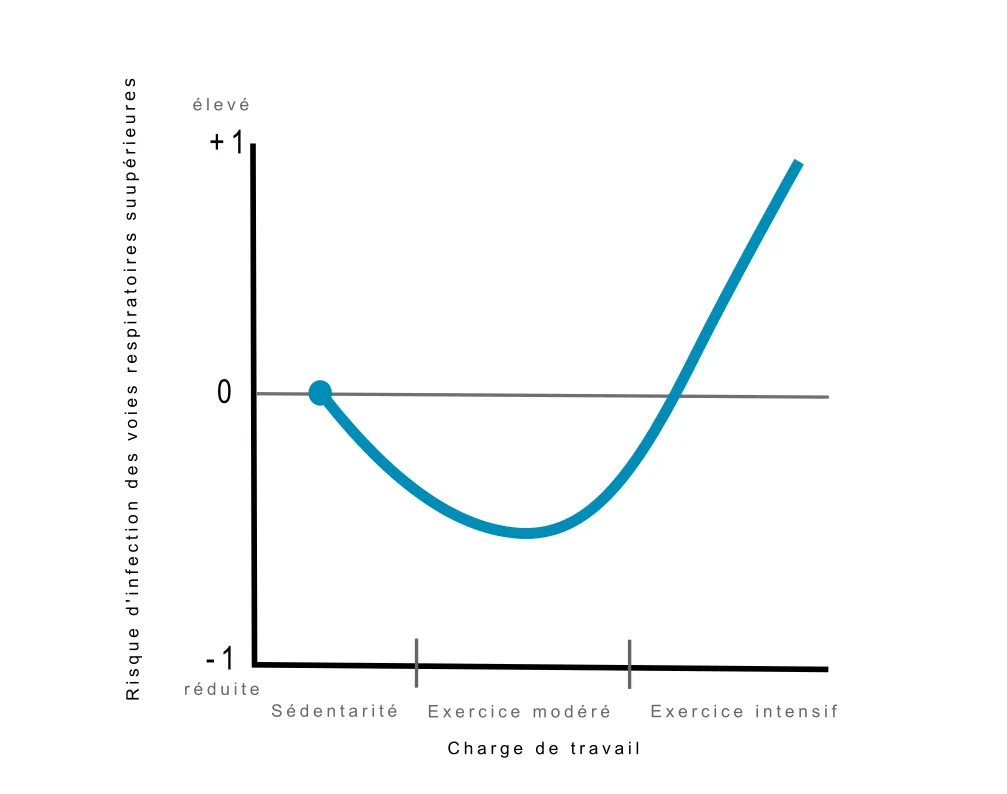
Should you train when you are ill?
If you want to reach your goals, every workout counts. But when you are ill, and it might be a simple cold, flu or something more serious, the question comes up: should you carry on training anyway?
The 10 signs of overtraining you need to recognise
Performance dropping, or fatigue that will not lift? Learn to spot the 10 signs of overtraining and recover before the damage sets in.

Active recovery: a guide to regenerating better
Understand how active recovery helps your body regenerate after an effort. This complete guide sets out the most reliable methods.