Data-driven coaching fascinates people as much as it worries them. For many it conjures up an avalanche of numbers, complicated sensors and a practice reserved for elite athletes. The reality is more nuanced, and above all more accessible. For an amateur, coaching steered by data can become a real lever for progress, provided you understand what it does well, what it does not do, and how to use it without being swamped.
Data-driven coaching: myths and realities for the amateur athlete
Reading time: ~9 min
- What data-driven coaching is
- Why the approach appeals to more and more amateurs
- Reality one: personalisation becomes more concrete
- Reality two: better prevention of injury and overload
- Reality three: performance can improve without doing more
- Myth one: the numbers are enough on their own
- Myth two: the approach works perfectly for everyone
- Myth three: the coach becomes redundant
- How to use data-driven coaching without complicating your life
- What coaches can genuinely get out of it
- FAQ
What data-driven coaching is

Definition and principle
Data-driven coaching describes an approach to training that leans on concrete data to guide decisions. That data can come from a connected watch, a heart rate monitor, a power meter, a fatigue questionnaire or sleep tracking. The idea is not to replace the coach’s experience or the athlete’s sensations; the aim is to observe better, understand better and adjust better.
Which sports and which data
In endurance sports such as athletics, trail, road cycling, mountain biking, swimming, open water, triathlon, cross-country skiing and biathlon, this logic is particularly relevant. Performance often depends on a fine balance between load, recovery, intensity and consistency. Coaching built on data helps you find that balance more precisely.
In practice, a data-guided approach can follow heart rate, heart rate variability, pace, power, sleep quality, perceived effort or progress over several weeks. So it is not a cold, dehumanised method: it is a framework for making decisions.
Why the approach appeals to more and more amateurs
More accessible tools
For a long time, data analysis seemed reserved for professional sport. Elite teams popularised these methods by cross-referencing information about fatigue, sleep, weather conditions and training load. Now the tools have become widely available.
An amateur no longer needs a laboratory to steer their training. A watch, a well-designed app like Slek and a coherent way of reading the numbers are often enough to bring useful trends to the surface.
More concrete follow-up for coach and athlete
Data-driven coaching makes visible what many people felt without being able to pin down. For a coach it is also a way of being more accurate: adapting the load, spotting the risk of excessive fatigue and individualising recommendations without making the follow-up heavier.
Reality one: personalisation becomes more concrete
Two athletes doing the same workout do not always take on the same load. One recovers quickly, the other accumulates fatigue; one sleeps well, the other strings together short nights. Data lets you break out of a one-size-fits-all logic: content, volume and intensity adjust to the athlete’s real profile.
That personalisation matters when you are juggling work, family and sport. A plan that is perfect on paper can become counterproductive if the athlete is going through a stressful period or recovering badly. Data does not do everything, but it helps you diagnose more accurately.
Reality two: better prevention of injury and overload
Spotting the faint signals
In endurance sports, an injury rarely comes from a single workout. It happens when several faint signals are ignored: load rising too fast, degraded sleep, insufficient recovery. Data-driven coaching picks those signals up earlier.
Adjusting before the injury
Data also lets you put numbers on the accumulated load through indicators such as ACWR (Acute to Chronic Workload Ratio), or anticipate the signs of overtraining before they set in. Studies show that detailed analysis of posture, muscular load and training history can reduce the risk of injury. Without promising total immunity, the approach lets you adjust before it is too late.
Reality three: performance can improve without doing more
Data-driven coaching is not about training more, but about dosing better. A finer approach improves the effectiveness of your training, sometimes by removing workouts that were useless or badly placed. For athletes short of time, that is a decisive advantage: calibrated training beats volume accumulated without stepping back.

Myth one: the numbers are enough on their own
No, data does not replace how you feel. An athlete can show perfectly correct indicators and still feel empty or unmotivated. Conversely, some workouts look hard on paper but are very well tolerated. Using data well means putting objective indicators and human perception into dialogue; often the gap between the two is the most useful information of all.
Myth two: the approach works perfectly for everyone
Limits to keep in mind
A data-based method is not magic. Its effectiveness depends on the quality of the measurements, on how regularly they are taken and on how they are interpreted. Amateurs generate smaller volumes of data and sometimes record it irregularly, so it pays to stay humble and avoid over-analysis.
| What data does well | What it should not claim to do |
|---|---|
| Observe load and recovery | Read someone’s mental state in all its complexity |
| Help individualise a workout | Decide on its own, in place of the coach |
| Detect useful trends | Guarantee linear progress |
| Make the follow-up more concrete | Replace the human relationship |
Myth three: the coach becomes redundant
The more the tools improve, the more visible the coach’s value becomes. A tool collects and displays the data; on its own it does not create a coherent training strategy. The coach’s role shifts: less time compiling, more time interpreting, explaining and adjusting. Data frees up time for the relationship, as long as the tool stays simple and useful.
How to use data-driven coaching without complicating your life
Start simple
Simplicity is the right starting point. There is no need to follow twenty metrics; better to choose a few reliable indicators, understood by everybody, and connect them to concrete decisions.
- Heart rate, sleep, perceived load and the consistency of your workouts, for example
- One clear, measurable objective tied to the athlete’s real progress
- A weekly conversation between the data and the sensations
Making the data talk
That base already makes the follow-up more intelligent. After that you can add power, heart rate variability or time spent in intensity zones. The essential thing is turning data into readable decisions: explaining simply when to ease off, hold steady or push on.
What coaches can genuinely get out of it
An approach structured around data improves how good the follow-up feels, strengthens the athlete’s trust and makes the work more effective. In endurance disciplines, having a clear view changes how you support people.
The benefits usually show up as more credible individualisation, better prevention of load mistakes, follow-up that is easier to explain, and a stronger coach-athlete relationship.
FAQ
Do you have to be an elite athlete to benefit?
No. It is often most useful for amateurs, because every workout counts for more.
Is a simple watch enough?
Often yes, to begin with. A simple watch to time your activity and a simple record of how it felt already provide relevant information, thanks to Carl Foster’s work, as long as you read it consistently.
Does data replace a training plan?
No. It helps you adjust the plan, but it replaces neither the objective, nor the method, nor human support.
Does it prevent every injury?
No. What it does is help you spot certain risk factors earlier and dose the load better.
Why do coaches use it?
Because with the right tools they gain precision, clarity and quality in the support they give.
More articles you might like

How joint mobility improves your stride
Find out how 10 minutes of joint mobility a day can improve your stride, and the essential exercises for running better and limiting injuries.
Minimalist running shoes: making the right choice
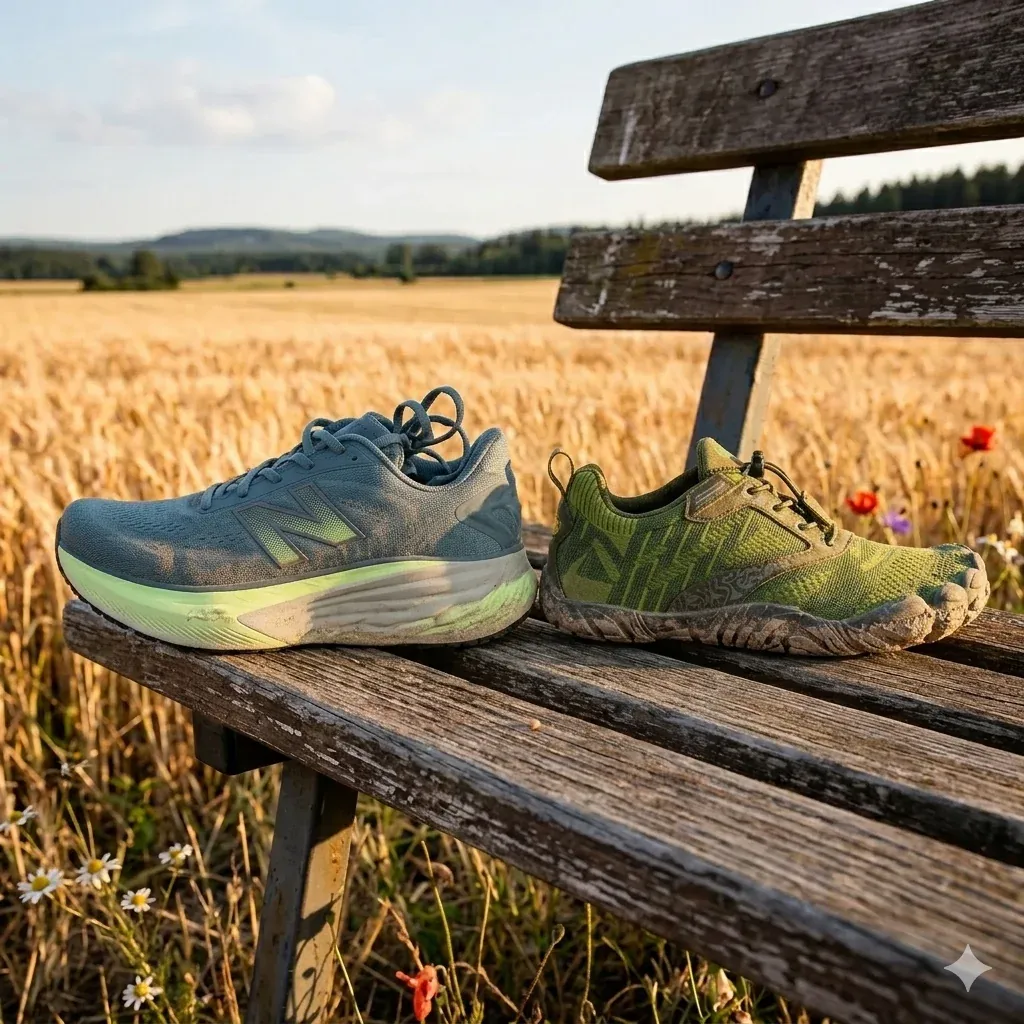
Minimalist or maximalist: compare the two running shoe philosophies, their benefits and their risks, and find the right choice for your profile so you can improve without getting injured.

A practical guide to increasing your running cadence
Find out how to increase your running cadence step by step. Follow our practical advice to run faster and stay clear of injury.